Tuesday, 25 September 2007

Fluid theory confirmed


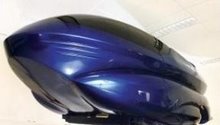
The Foton M-3. Credit ESA

The Foton M-3 capsule carries a 400 kg European experiment payload with experiments in a range of scientific disciplines - including fluid physics, biology, crystal growth, radiation exposure and exobiology.

The capsule spends 12 days orbiting the Earth, exposing the experiments to microgravity and, in the case of a handful of experiments also exposing them to the harsh environment of open space, before re-entering the atmosphere and landing in the border zone between Russia and Kazakhstan.

All liquids experience minute fluctuations in temperature or concentration as a result of the different velocities of individual molecules. These fluctuations are usually so small that they are extremely difficult to observe.

In the 1990s, scientists discovered that these tiny fluctuations in fluids and gases can increase in size, and even be made visible to the naked eye, if a strong gradient is introduced. One way to achieve this is to increase the temperature at the bottom of a thin liquid layer, though not quite enough to cause convection. Alternatively, by heating the fluid from above, convection is suppressed, making it possible to achieve more accurate measurements.

It was suggested that the fluctuations would become much more noticeable in a weightless environment. Now, thanks to the Foton mission, the opportunity to test this prediction has come about, and the results completely support the earlier forecast.

To the delight of the science team, the images visually support the theoretical predictions by showing a very large increase in the size of the fluctuations. Data analysis has also shown that the amplitude of the fluctuations in temperature and concentration greatly increased.

It may be that the results will influence other types of microgravity research, such as the growth of crystals. This research may even lead to some new technological spin-offs.

Read more: Fluid Theory confirmed by Foton
_________________________________________________________
_________________________________________________________

Thursday, 30 August 2007

Hayabusa limps home


A third ion engine is now running on Japan's problem-plagued Hayabusa spacecraft. Having another working engine increases the chances that the spacecraft will be able to limp back to Earth.

If the craft does return as planned in 2010, researchers will finally find out whether it collected the first-ever samples from an asteroid during its two landings on the tiny space rock Itokawa.

watch an animated video of the mission

In late 2005, the spacecraft lost all the fuel for its chemical thrusters because of a leak, so mission managers have been trying to get Hayabusa home using its ion engines instead.
These engines ionise xenon gas and then use electric fields to accelerate the ions, providing a steady – though weak – thrust. They were meant to be used only for the outward journey to the asteroid.

Two of the four ion engines were tested in mid 2006 and found to be in working order, and Hayabusa began its return journey in April 2007. But these engines are in danger of failing – one of them has been firing for a total of 13,500 hours, close to its design lifetime of 14,000 hours.

Now, spacecraft operators have coaxed a third engine back to life. The engine started firing ions on 28 July after several days had been spent warming up the engine's power supply, a statement on the Japan Aerospace Exploration Agency (JAXA) website said.

This third engine has only been fired for 7,000 hours, leaving it with more expected lifetime than either of the others. The fourth engine is being reserved as a spare in case the others fail.

Hayabusa was meant to collect samples from Itokawa by firing pellets into the surface of the 535-metre-long rock and scooping up the resulting debris. But data from two landings in November 2005 suggest that the pellets never fired because the craft's onboard computer sent conflicting signals to its collection instruments.

Still, mission officials hope to bring the spacecraft back to Earth in case some asteroid dust slipped into its collection chamber by chance. If it completes the trip, it is expected to drop a capsule in the Australian outback in June 2010.
________________________________________________________
________________________________________________________
Mini-Mag Orion: A Near-Term Starship? from Centauri Dreams
________________________________________________________
________________________________________________________

Thursday, 23 August 2007

VASIMR


The Variable Specific Impulse Magnetoplasma Rocket (VASIMR) system encompasses three linked magnetic cells. The "Plasma Source" cell involves the main injection of neutral gas (typically hydrogen, or other light gases) to be turned into plasma and the ionization subsystem. The "RF Booster" cell acts as an amplifier to further energize the plasma to the desired temperature using electromagnetic waves. The "Magnetic Nozzle" cell converts the energy of the plasma into directed motion and ultimately useful thrust.

Coupled with nuclear power this new type of rocket technology could dramatically shorten human transit times between planets (less than 3 months to Mars) and propel robotic cargo missions with a very large payload mass fraction. Trip times and payload mass are major limitations of conventional and nuclear thermal rockets because of their inherently low specific impulse (less than 1000 seconds). Plasma rockets such as VASIMR enable a very high specific impulse (greater than 10,000 seconds.) For these missions VASIMR will operate with hydrogen or deuterium propellant, both are abundant throughout the known universe.

The VASIMR has two additional important features that distinguish it from other plasma propulsion systems:
1. Ability to vary the exhaust characteristics (thrust and specific impulse) in order to optimally match mission requirements. This results in the lowest trip time with the highest payload for a given fuel load.
2. VASIMR is driven by electromagnetic (RF) waves and has no physical material electrodes in contact with the hot plasma. This results in greater reliability and longer life and enables a much higher power density than competing designs.

4-th State of Matter
The first step to understanding how a plasma rocket operates is learning about plasma. A plasma state can be achieved when a substance in its gaseous state is heated to very high temperatures - tens of thousands to millions of degrees. At this temperatures, electrons are stripped, or lost, from the neutral atoms.

In the overheated gas, electrons, which hold a negative charge, and ionized atoms, which hold a positive charge, mixed together making an electrically neutral "soup" of charged particles that is a plasma. This is a very common occurrence in nature. In fact, 99 percent of the visible universe is in some form of a plasma state, including lightning, very hot flames, nebulas, the Sun and other stars. The plasmas at the extreme temperatures required of a plasma rocket cannot be contained by any known material. Fortunately, plasmas can be controlled by a magnetic field.
________________________________________________________

________________________________________________________

Monday, 20 August 2007

Hinode & Solar Mysteries


Hinode (Sunrise in Japanese) was launched to study magnetic fields on the Sun and their role in powering the solar atmosphere and driving solar eruptions. With its Extreme Ultraviolet Imaging Spectrometer (EIS), effectively a solar speed camera, it is now possible to pinpoint the source of eruptions during solar flares and to find new clues about the heating processes of the corona.

The speed camera is a spectrometer, an instrument that splits the light coming from solar plasma, a tenuous and highly variable gas, into its distinct colours (or spectral lines), providing detailed information about the plasma. The velocity of the gases in a solar feature is measured by the Doppler effect - the same effect that is used by police radars to detect speeding motorists.

Read more Hinode helps unravel long-standing solar mysteries
________________________________________________________
________________________________________________________
Princeton scientists confirm long-held theory about source of sunshine
Voyager Interstellar Mission Proceeds from Centauri Dreams
________________________________________________________
________________________________________________________

Friday, 17 August 2007

Moving to the Sun's Rythm


Scientists from the Ulysses mission have proven that sounds generated deep inside the Sun cause the Earth to shake and vibrate in sympathy. They found that Earth’s magnetic field, atmosphere and terrestrial systems, all take part in this cosmic sing-along.

The HISCALE experiment on board Ulysses, a joint mission between ESA and NASA, present evidence that proves that Earth moves to the rhythm of the Sun. They show that distinct, isolated tones, predicted to be generated by pressure and gravity waves in the Sun, manage to reach Earth and are detectable in our environment.

Just as seismologists on Earth use sound waves to probe the interior of our world, solar scientists would like to use g-modes to probe the core of the Sun, if only they could detect them. G-modes have been undetectable optically.

The team examined a wide range of data sets covering natural phenomena and technological systems in fields as diverse as telecommunications and seismology and continued to find new evidence of discrete tones with characteristics of solar oscillations in what was previously considered background “noise”. This added to the puzzle posed by the Ulysses findings.

David Thomson from the Ulysses team believes that the key to the problem is magnetism. He suggests that the g-mode vibrations are picked up by the magnetic field at the Sun’s surface. Part of this magnetic field is then carried away from Sun into interplanetary space by solar wind, where it can be detected by space probes like Ulysses.

The magnetic field of the solar wind in turn interacts with the Earth’s magnetic field and causes it to vibrate in sympathy, retaining the characteristic g-mode signals. The motions of the geomagnetic field then couple into the solid Earth to produce small, but easily detectable, responses as Earth, with many of its technological systems, moves to the rhythm of the Sun.

Ulysses is a joint ESA/NASA mission studying the interplanetary medium and solar wind in the inner heliosphere, beyond the Sun's equator, for the first time.

Read more Moving to the Rythm of the Sun from ESA
________________________________________________________
________________________________________________________
How Solar Neutrinos make the Sun's heart beat @ Scientific Blogging
Voyager Interstellar Mission Proceeds from Centauri Dreams
________________________________________________________
________________________________________________________